

How the KBO League Season Works — A Beginner’s Guide to Korean Baseball in 2026

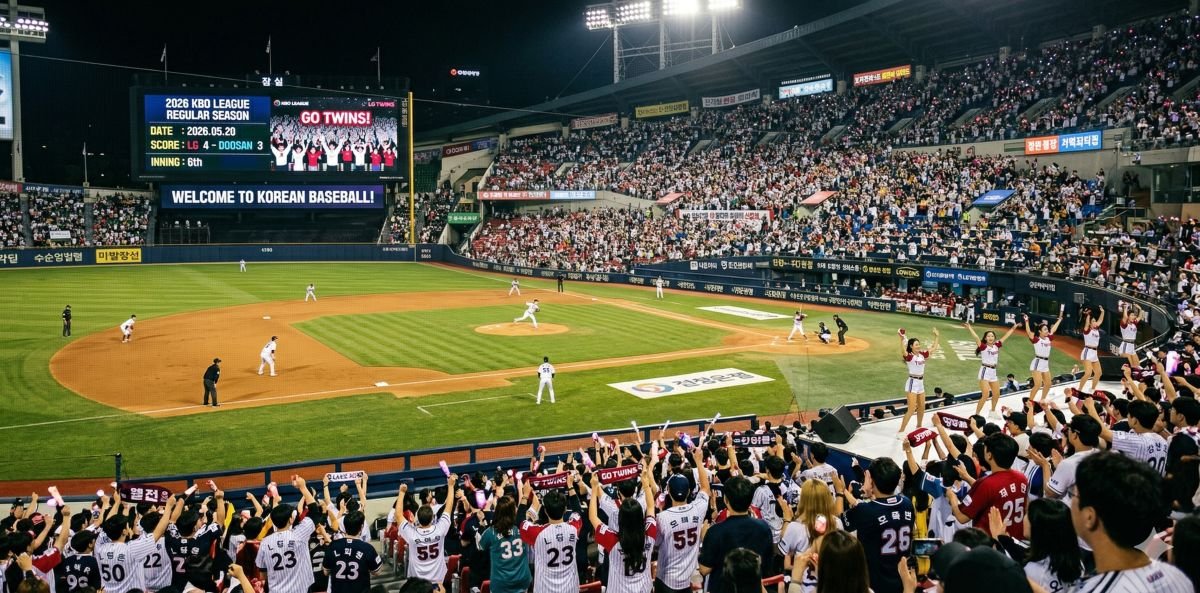
The 2026 KBO League season is underway, and for first-time followers in Bucheon, Suwon, and across Gyeonggi-do, the sheer number of games, the unfamiliar playoff format, and the new rules introduced this year can make the sport feel more complicated than it needs to be. This guide breaks it all down from the beginning.
What the KBO League Is
The Korea Baseball Organization League — universally known as the KBO — is South Korea’s top professional baseball competition. Founded in 1982 with six teams, the league has grown to its current format of ten clubs competing across a full season that runs from late March through October. The 2026 season is the 45th edition of the competition, and it is the most widely followed domestic sport in the country by attendance.
The ten clubs are spread across South Korea’s major cities. Fans in the Gyeonggi-do region often follow teams based in nearby Seoul and Incheon, including the LG Twins, Doosan Bears, and SSG Landers, though every club has a national following that tracks games online and through broadcast.
The Regular Season: Nearly Daily Baseball for Six Months
The KBO regular season is long and dense by design. The 2026 season began on March 28 and runs through September 6. During that window, each of the ten teams plays 144 games — facing every other team in the league 16 times across the schedule. Games are played every day of the week except Mondays, which function as the league’s universal rest day.
For a new fan, this schedule density is often the first surprise. Korean professional baseball is not a weekend event. It is a near-daily fixture in the sports calendar for six months straight. A team might play a three-game series in Daejeon, travel to Busan for three more, and return home for a weekend set — all within a single week.
This structure means the standings shift constantly. A team that looks dominant in April might cool significantly by July, and a club that starts poorly can rebuild its position across the long haul of the season. The volume of games is what makes the KBO standings a genuinely meaningful indicator of quality — random results average out over 144 games in a way they simply cannot over 30 or 40.
How the Postseason Works: A Step-Ladder System
At the end of the regular season, the top five teams by win-loss record advance to the postseason. This is where the format becomes distinctive.
The KBO postseason uses a step-ladder structure, meaning teams enter the competition at different points depending on where they finished in the regular season. The team that finishes fifth plays the fourth-place team in a Wild Card Game, where the fourth-place side begins with a built-in advantage — they need only one win to advance, while the fifth-place team must win twice.
The winner of the Wild Card Game then plays the third-place team in a best-of-three Semi-Playoff series. The winner of that series advances to face the second-place team in a best-of-five Playoff series. Finally, the winner of the Playoff series meets the regular season champions — the team that finished first — in the Korean Series, a best-of-seven championship that determines the year’s title.
This structure rewards regular season performance directly. Finishing first means sitting out the early rounds entirely and entering fresh against a team that has already played multiple elimination games. Finishing fifth means surviving the most dangerous gauntlet, needing to beat three separate opponents just to reach the championship round.
What Changed for 2026: The Pitch Clock and the Asian Quota
Two rule changes introduced for 2026 are worth understanding because they directly affect how games feel and how rosters are built.
The first is the pitch clock adjustment. In 2025, the KBO introduced a pitch clock for the first time — a timer that limits how long pitchers can take between deliveries. That change immediately shortened average game times to three hours and two minutes, the fastest average since the year 2000. For 2026, the KBO tightened the clock further. Pitchers must now begin their delivery within 18 seconds when the bases are empty, reduced from 20 seconds, and within 23 seconds with runners on base, down from 25. The intent is to keep the pace of play moving and prevent the extended dead time between pitches that used to stretch games well past three hours.
The second change involves roster composition. Previously, each KBO team could sign up to three foreign players. In 2026, that limit increased to four — but the additional slot is specifically reserved for players from Asian countries, under what the league calls the Asian Quota System. This change opens the door for players from Japan, Taiwan, and other Asian baseball markets to join KBO rosters more easily, expanding the international character of the league.
How to Follow the Season as a New Fan
The simplest entry point for a new KBO fan is the standings. Checking where a team sits in the ten-team table after each week gives an immediate sense of the season’s shape. As the September 6 end date approaches, the race for the final postseason spots tends to produce some of the most competitive and closely watched games of the entire year.
For context on how Korean sports leagues structure their seasons and what the tier system means for competition format, How to Read a K League Season offers a useful parallel guide focused on football that applies many of the same structural concepts.
Understanding variance and why a single result rarely tells the full story of a team’s quality is one of the deeper lessons that long-format leagues like the KBO teach naturally over time. The foundational logic behind that concept is explored in 왜 강팀도 자주 패배하는가 — a useful analytical companion to following any high-volume sports competition.
The KBO season is long for a reason. The format is designed to reward consistency, expose weakness, and produce a champion that has genuinely earned the title across 144 games and a demanding postseason gauntlet. For a first-time follower, the best approach is simply to pick a team and start watching. The structure will make more sense with every week that passes.