

How the KBL Spring Basketball Playoffs Work: A Beginner’s Guide to Korea’s Postseason Format

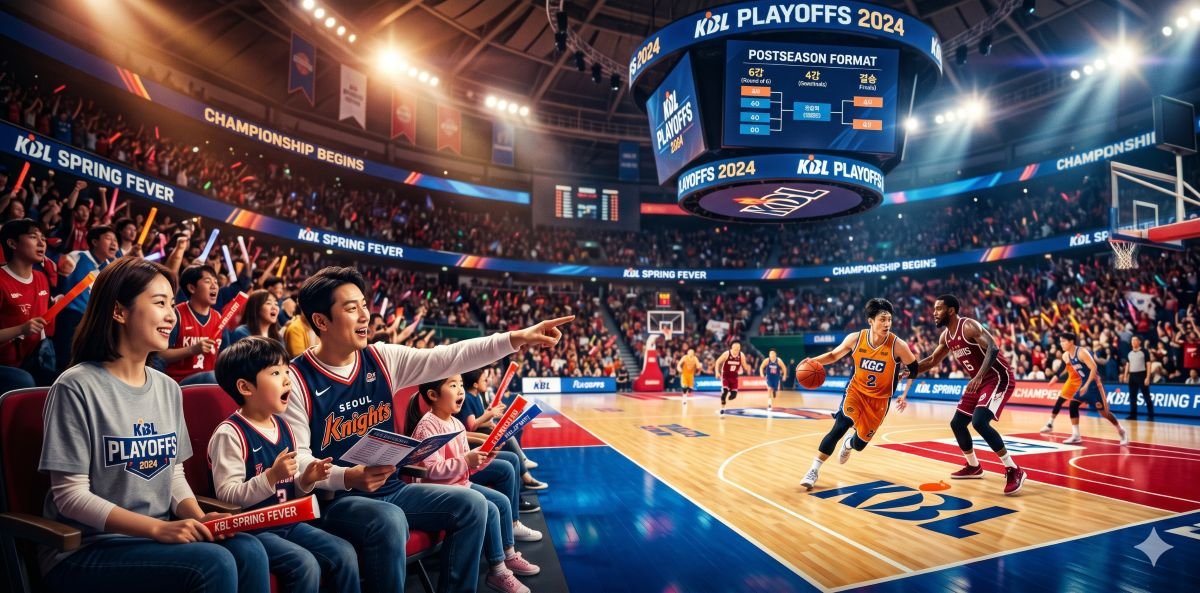
Every April, Korean basketball shifts into a different gear. The regular season wraps up, the standings lock in, and what fans call “봄 농구” — spring basketball — begins. If you’re new to the Korean Basketball League and wondering why some teams jump straight into the semifinals while others have to fight their way through an earlier round, this guide breaks down exactly how the KBL postseason is structured and why it works the way it does.
What Is the KBL and How Does the Regular Season Work?
The Korean Basketball League was established in 1997 and currently operates with ten franchises, each sponsored by a major Korean corporation. Teams play 54 games across the regular season — 27 at home and 27 away — running from October through March. At the end of those 54 games, the standings determine which teams qualify for the postseason and where they enter it.
Only the top six teams in the final regular season standings advance to the playoffs. The bottom four are eliminated entirely and begin preparing for the following season.
The Quarterfinals: Where Seeds 3 Through 6 Begin
Teams that finish third through sixth in the regular season enter the playoffs at the quarterfinal stage. These matchups pair the third seed against the sixth, and the fourth seed against the fifth. Each quarterfinal series is played in a best-of-three format, meaning the first team to win two games advances. Because the series is short, a single poor performance can end a team’s season — which is part of what makes this stage so tense to watch.
The two winners of the quarterfinal matchups then move forward to the semifinals.
Why First and Second Place Skip the Quarterfinals
The two teams that finish first and second in the regular season receive a direct bye to the semifinal round. This is not simply a reward for finishing high — it reflects a meaningful structural principle. Across many professional leagues, regular season performance is used to reduce the variance introduced by short playoff series. A team that dominates over 54 games has demonstrated consistency that a three-game series cannot fairly adjudicate. By guaranteeing the top two teams a direct path to the semis, the KBL format protects the integrity of the regular season result while still giving lower-seeded teams a genuine path to the championship.
This also creates a strategic element: teams fighting for first or second place know the reward is more rest, more recovery time, and a longer runway into the title round.
The Semifinals: Best-of-Five
Once the quarterfinals are complete, the four remaining teams — the top two seeds plus the two quarterfinal winners — contest the semifinals. These are played in a best-of-five format, meaning a team needs three wins to advance. The longer format gives more room for adjustments between games, rewards depth and coaching adaptability, and generally produces a more accurate picture of which team is better prepared.
The two semifinal winners advance to the KBL Championship Finals.
The Championship Finals
The championship series determines the KBL champion for the season. It is played in a best-of-seven format, giving both teams the maximum opportunity to demonstrate superiority over a meaningful sample of games. The title has significant implications for franchise identity, player contracts, and the commercial profile of the sponsoring corporation — which is why corporate-backed teams invest heavily in postseason preparation.
The 2025–26 Season: Spring Basketball in Progress
As of mid-April 2026, the KBL playoffs are in full swing. The semifinal stage is underway, with Goyang Sono Skygunners — the Gyeonggi-do based franchise — having advanced and currently competing in the semis. For fans in Bucheon and the broader Gyeonggi region, this is a meaningful moment. Goyang is one of the few Gyeonggi-area sides in the KBL, and their postseason run draws attention from communities across the province.
This season has been among the most commercially visible in the league’s history, with LG Electronics serving as title sponsor and last season’s championship win by Changwon LG Sakers setting a high bar for this year’s contenders.
If you’re trying to follow the postseason for the first time, understanding the bracket structure makes each result land differently. Knowing that a quarterfinal loss ends a season immediately, or that a first-place finish in March carries real structural benefits in April, turns the games from isolated results into part of a coherent competition story.
For broader context on how Korean sports leagues structure their seasons and what promotion and relegation mean in the domestic sports ecosystem, the guide at Bucheon Insider on what promotion to K League 1 actually means offers a useful parallel on how Korean sports use tiered formats to organize competition.
Understanding the format is the first step to following the games. Spring basketball rewards patience — and now that you know how the bracket works, every win and every elimination carries the weight it deserves.
For readers interested in how sports league structures and playoff formats compare across different regulatory and cultural contexts, 경기 분석의 핵심 역량 모멘텀 신호와 통계적 잡음의 구분 offers additional analytical context on interpreting in-game dynamics.