

How Generation Z Watches Sports Differently — and What Digital Literacy Research Says About Learning From Online Platforms

A peer-reviewed study published in February 2026 has found that among Korean Generation Z sports audiences, the ability to access digital sports content and the ability to critically evaluate that content are not the same skill — and the gap between them has measurable consequences for how accurately young fans understand what they are watching.
Access Is Not Competency
South Korea ranks among the most digitally connected societies on earth. Data from the National Information Society Agency indicates that access to digital information among the general population stands at 96.5 percent — a figure that places Korea at the frontier of digital infrastructure development globally. By that measure, the country has effectively solved the access problem. Nearly every citizen can reach digital content.
But the February 2026 study published in Behavioral Sciences, examining how Generation Z engages with sports learning through online platforms, identified a more granular picture beneath that headline figure. While digital access sits at 96.5 percent, digital information utilization — the ability to actually use digital content effectively — stands at 80 percent. Digital competency, defined as the capacity to critically evaluate, contextualize, and apply digital information, sits at 65.6 percent.
That 30-percentage-point gap between access and competency is not a technical problem. It is a behavioral and educational one. It means that a substantial portion of the Korean population, including a significant segment of younger sports audiences, can reach digital sports content without being reliably equipped to evaluate whether that content is accurate, representative, or selectively framed.
How the Study Was Structured
The February 2026 research examined differences in sports learning among Generation Z based on digital literacy levels, using data collected from adults engaged in sports learning through a range of platforms including YouTube, social networking services, online lecture platforms, and mobile applications. Participants were classified into low, medium, and high digital literacy groups, allowing the researchers to measure how literacy level affected the way participants engaged with, retained, and applied sports information encountered through digital channels.
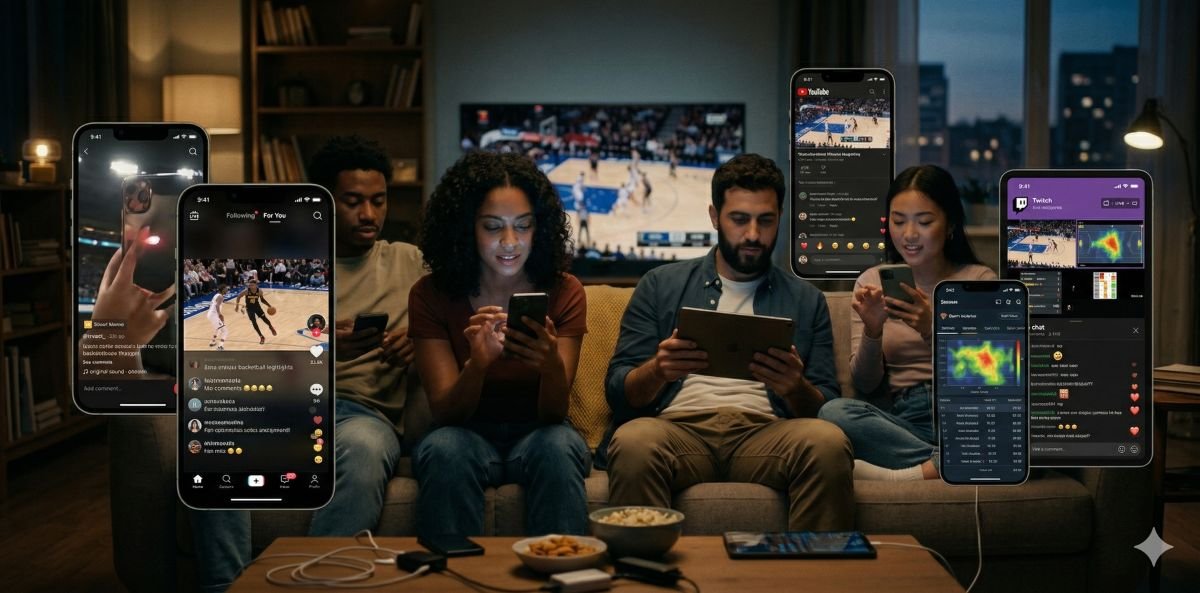
The findings carry direct relevance for understanding how younger Korean sports audiences are actually forming their picture of the sports they follow. Generation Z fans are not primarily accessing sports through scheduled broadcast television. They are accessing it through algorithmically curated social feeds, short-form video clips, creator commentary, fan community posts, and mobile application interfaces — each of which presents sports information through a particular editorial or algorithmic lens that shapes what content reaches the viewer and in what context.
The study’s core insight is that digital literacy determines how well a viewer can account for that lens. A high-literacy user encountering a selectively edited highlight clip, a misleading league table graphic, or a social post misrepresenting a player’s statistical output has the tools to identify the distortion and seek correcting information. A low-literacy user encountering the same content has fewer resources for recognizing that what they are seeing may not accurately represent the underlying reality.
The Probability Problem in Sports Content
This behavioral dynamic connects directly to a well-documented pattern in how sports statistics are processed by audiences with varying levels of analytical familiarity. The intuitive reading of sports data — pattern recognition based on recent results, narrative framing of statistical outliers, selective attention to confirming evidence — is not random noise. It follows predictable paths. The analysis of why intuitive probability reading in sports data produces systematically unreliable conclusions examines the specific cognitive patterns through which sports audiences misread statistical information — patterns that digital literacy training is designed to counteract but that remain active even in high-access environments where accurate information is technically available.
For Generation Z sports audiences consuming content through platforms that optimize for engagement rather than accuracy, these patterns are encountered under conditions that amplify rather than correct them. An algorithm that surfaces content based on engagement metrics will preferentially deliver sports content that generates strong emotional responses — dramatic claims, controversial takes, surprising statistics presented without context — over content that presents accurate but less emotionally charged analysis. The viewer with high digital literacy can recognize and partially compensate for this dynamic. The viewer with lower digital literacy is more likely to take the curated feed as a representative sample of sports reality.
What Digital Literacy Means in a Sports Content Context
The February 2026 study defines digital literacy in terms that extend beyond the ability to operate devices and navigate platforms. Digital literacy, in this framework, encompasses information utilization capabilities grounded in critical thinking and ethical awareness — specifically including the ability to assess the reliability and value of information encountered online.
Translated into sports content terms, this means the capacity to distinguish between a legitimate statistical analysis and a cherry-picked dataset, between a credible injury report and unverified social media speculation, between a meaningful performance trend and a short-term statistical fluctuation that carries no predictive value. These are not abstract analytical skills. They are practical tools for forming an accurate picture of a league table, a player’s actual form, or the significance of a competition result.
The gap between access and competency identified in the National Information Society Agency data suggests that a meaningful portion of Korean sports fans are regularly encountering sports content without the evaluative tools to accurately assess it. This is not a criticism of those fans. It is an observation about the environment in which sports content is now primarily consumed — one that places a premium on analytical skills that formal sports education has rarely prioritized.
The Gyeonggi Dimension
For sports audiences in Anyang and the broader Gyeonggi Province region, where younger fans are among the most active consumers of mobile and social sports content in Korea, the research findings connect directly to local patterns of sports engagement. AnyangInsider’s coverage of sports behavior, digital engagement, and community sports culture in the Gyeonggi region provides context for how these national research findings manifest within local sports communities — where the gap between digital access and digital competency is not a statistical abstraction but a lived dimension of how fans follow the teams and athletes they care about.
Regional sports communities in Gyeonggi-do are also increasingly important sites for youth sports development, meaning that the digital literacy of young sports audiences in this area has implications not just for how they consume sports content but for how they form their understanding of athletic performance, competition integrity, and the institutions that govern the sports they follow.
Why This Research Matters Beyond the Classroom
The February 2026 study is situated in an educational research context, but its implications extend into the broader relationship between sports audiences and the information environments in which they follow sport. As the volume of digital sports content continues to grow, and as the platforms delivering that content become more sophisticated in their optimization for engagement, the analytical skills required to navigate that environment accurately become more rather than less important.
The research finding that high digital literacy produces meaningfully better sports learning outcomes is not only an argument for digital education programs. It is an argument for treating sports information literacy as a genuine competency — one that affects how accurately fans understand the sport they love, how well they can evaluate the claims made about athletes and competitions, and how effectively they can distinguish signal from noise in an environment that generates more of both every year.