

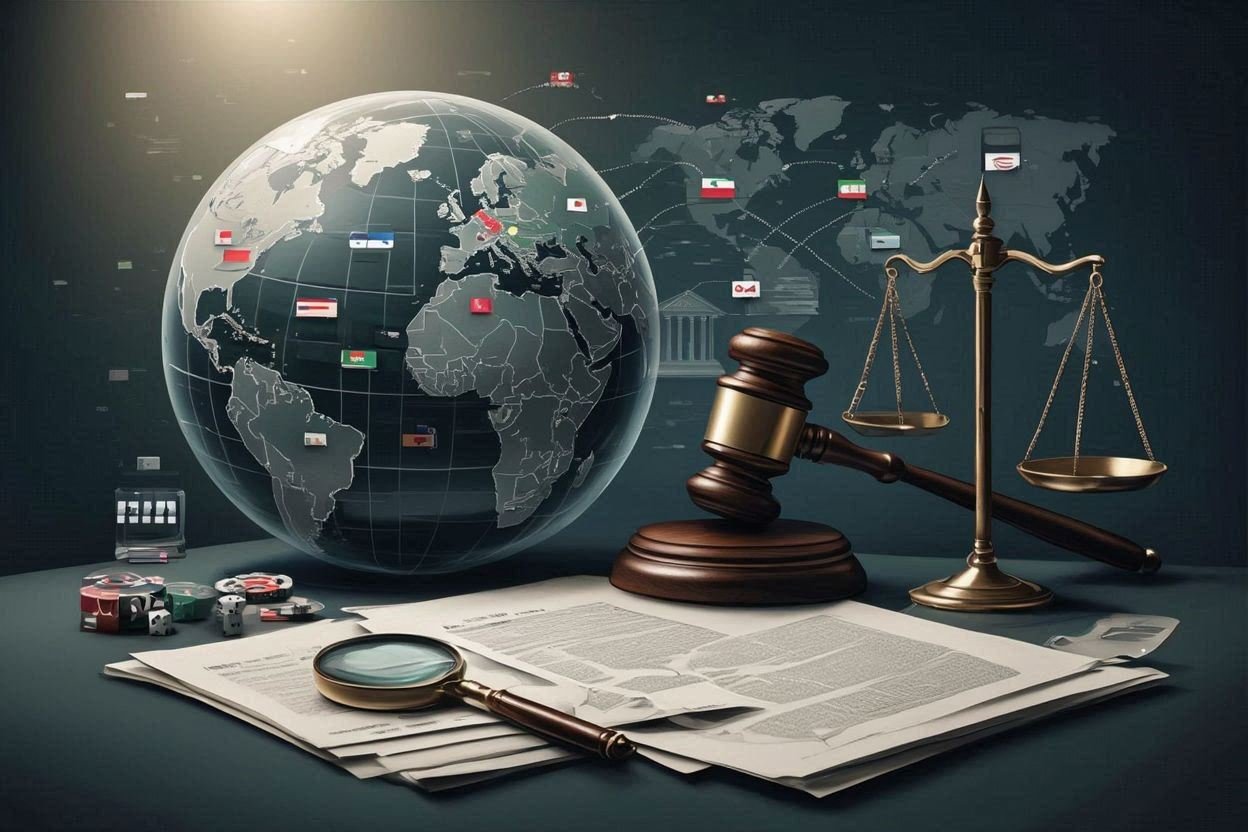
The global gambling legal landscape is a complex patchwork where the same activity can be a celebrated national pastime, a strictly taxed business, or a serious criminal offense depending on the border you cross. In 2026, the majority of the world is shifting toward a regulated licensing model, where governments allow private companies to operate in exchange for strict oversight and tax revenue. While regions like Europe and North America lead this trend through sophisticated legal frameworks, much of Asia and the Middle East maintain total prohibitions based on religious and social values, creating a sharp divide in how the world experiences betting.
The Three Pillars of Global Regulation
To understand the current legal map, experts generally categorize countries into three zones. Each zone defines the safety, legality, and accessibility of gambling for the average person.
The Green Zone (Regulated): These are countries with clear laws and licensing systems. Examples include the United Kingdom, the Netherlands, and Brazil, which launched its full licensing system in 2025. In these markets, players are protected by the law, and operators must pay taxes.
The Grey Zone (Unregulated): In these regions, no specific laws exist to either ban or allow online betting. Countries like India and parts of Latin America fall here. While it isn’t “illegal” to play, there is no government safety net if a site refuses to pay out winnings.
The Red Zone (Prohibited): Betting is strictly illegal in these areas. This includes most of the Middle East, China, and Indonesia. Engaging in gambling here can lead to heavy fines or imprisonment.
Original Data: Regional Growth and Legal Trends (2026)
Recent market reports show that “Legalization and Regulatory Liberalization” is the single biggest driver of the industry’s growth, contributing a 3.2% increase to the global growth rate. As of March 2026, the global gambling market is valued at approximately $600.98 billion.
| Region | Market Status (2026) | Growth Driver |
| North America | 40.5% Growth Share | Expansion of State-Level Sports Betting |
| Europe | Largest Market (49% share) | High Online Penetration and Clear Laws |
| Asia-Pacific | Mixed/Strict | Macau Recovery and Emerging “Resort” Models |
| Latin America | Fast-Growing | Brazil’s New Federal Licensing Framework |
Data from various market researchers indicates that Eastern Europe is expected to be the fastest-growing sub-region through 2030, as more countries move from “Grey” to “Green” status to capture digital tax revenue.
Regional Deep Dive: A World of Difference
Europe: The “Gold Standard”
Europe remains the most mature market. The United Kingdom is often cited by experts as the model for the rest of the world. The UK Gambling Commission (UKGC) enforces strict “affordability checks” to ensure players aren’t spending more than they can afford.
“The European model proves that regulation is a better shield for the public than a ban,” says legal analyst Marcus Thorne. “By bringing the industry into the light, you can monitor behavior and stop crime.”
North America: The State-by-State Patchwork
In the United States, there is no single national law. Instead, it is a “state-by-state” battle. In 2026, states like New Jersey and Pennsylvania are highly profitable, while others like Utah and Hawaii maintain total bans. This creates a confusing environment where a person can legally bet on one side of a bridge but not the other.
Asia and the Middle East: Zero Tolerance
In Asia, the landscape is hardening. A 2026 report from international law firms highlights that governments in China, Japan, and South Korea are increasing their “cross-border enforcement,” using asset freezes and website blocks to stop citizens from using offshore sites. In these regions, the law is used as a tool for “social protection” rather than revenue.
The Role of Player Protection
A key concept in modern law is the Duty of Care, which is the legal responsibility to avoid causing harm to others. In the world of 2026 gambling, this means regulators are forcing companies to use AI to track “problem patterns.” If a player shows signs of addiction, the law in countries like Sweden or Germany requires the operator to step in and offer a “cooling-off” period.
Expert Insights: The Future of the Law
As we look toward 2030, experts predict that “Harmonization,” where different countries agree on the same rules, will be the next big step. This would make it harder for illegal sites to hide in one country while taking money from another.
“We are moving away from a world of ‘wild west’ gambling,” notes Sarah Jenkins, a technical lead in gaming compliance. “The 2026 data shows that players now prefer licensed sites because they value their data security and the guarantee of being paid.”
“The internet has no borders, but the law does. The future of gambling regulation is about cooperation between nations to stop illegal crime while allowing adults to have fun safely.” — James P. Walsh, International Betting Integrity Association.
Summary for the Global Traveler
If you are traveling or looking to participate in the market, remember:
Check the License: If a site doesn’t show a logo from a recognized authority, it is likely in the Grey or Red zone.
Respect Local Borders: Using a “VPN” to bet in a country where it is banned is a serious legal risk.
Verify Tax Rules: In the UK, winnings are generally tax-free, but in the US, you must report them as income.
The legal landscape is no longer just about “yes” or “no,” it is about how a society chooses to manage human behavior through technology and law.